Most of us think about the air outside — smog alerts, fire season, pollen counts. But the air your family breathes most is the air inside your home. According to the U.S. EPA, Americans spend roughly 90% of their time indoors, and indoor air often carries higher concentrations of some pollutants than the air outside.
Your HVAC system sits right in the middle of that. Every time it runs, it pulls air from your rooms through the return vents, pushes it through the ductwork, and sends it back out. In a typical home, the whole volume of indoor air passes through that system many times a day. Whatever has settled inside the ducts gets a free ride into every bedroom, every time.
This guide explains, in plain language, what actually builds up in ductwork, who is most affected by it, and what a professional cleaning can realistically do for the people in your home.
What's actually living in your ducts
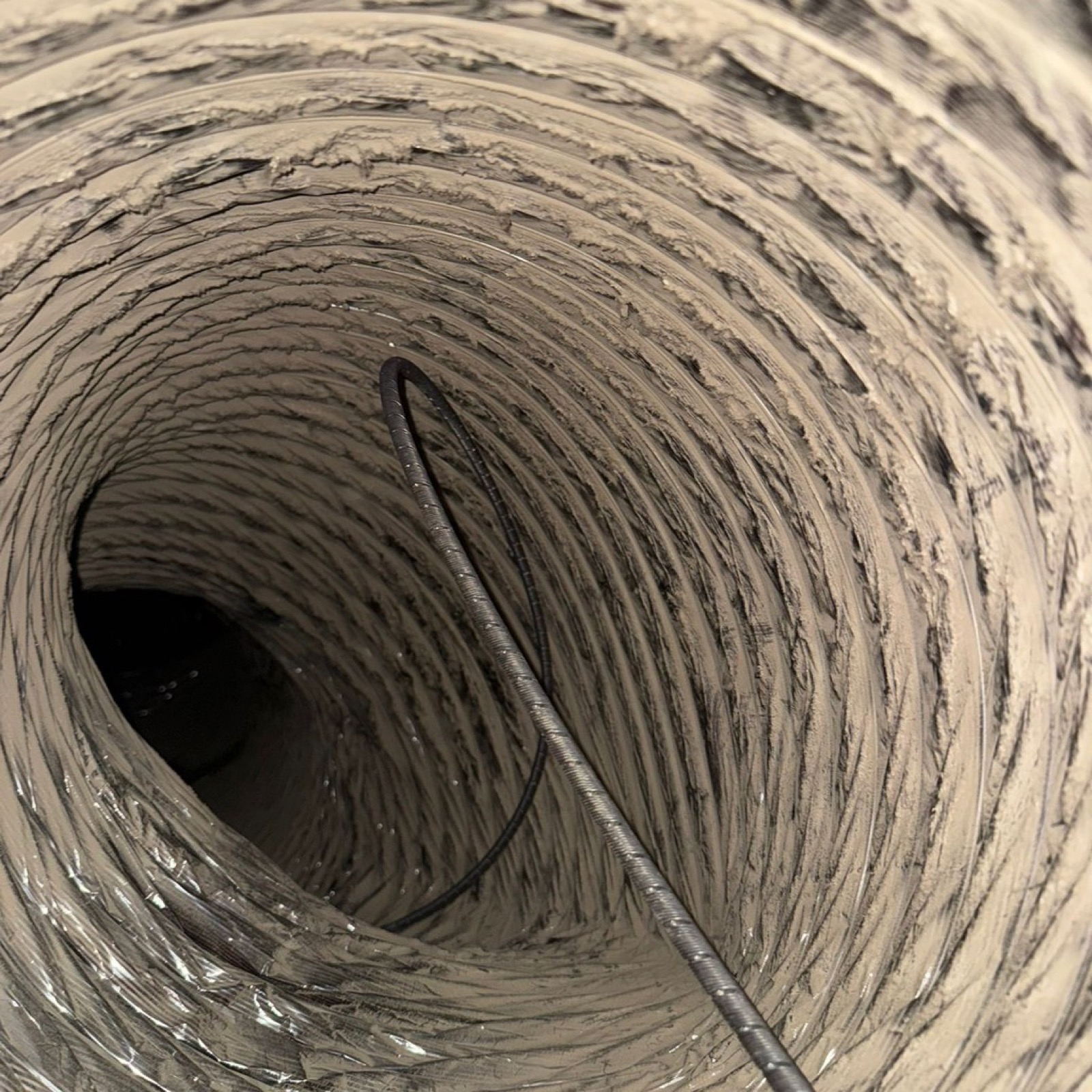
When our technicians run a camera into a California duct system that hasn't been serviced in a while, here's what we typically find:
- Household dust — a mix of skin cells, textile fibers, soil tracked in from outside, and fine particles from cooking and candles.
- Dust mite debris — mites themselves live mostly in bedding and carpets, but their droppings and body fragments are light enough to be carried into return vents. They are one of the most common indoor allergy triggers.
- Pet dander and hair — even homes with a single cat or dog accumulate a surprising layer, especially near the return grilles.
- Pollen — California's long growing season means pollen enters with every open door and window, and much of it ends up in the return air.
- Mold spores — especially in coastal homes and around the AC coil and drain pan, where condensation creates moisture.
- Wildfire ash and PM2.5 — fine smoke particles that settle during fire season and keep recirculating for months afterward.
- Construction dust — drywall, sawdust, and sanding dust from any renovation, even one done years ago.
- Rodent and insect debris — in attic and crawlspace duct runs, we regularly find droppings, nesting material, and insect remains.
None of this is unusual. It's simply what happens when a system moves thousands of cubic feet of air every hour, year after year. The question isn't whether it's there — it's how much, and how it affects the people living with it.
Allergies: why your symptoms might be worse indoors
If you sneeze more at home than at the office, wake up congested, or notice itchy eyes that ease up when you travel, your home's air may be part of the story.
Allergy symptoms are triggered by exposure. The more allergen particles you breathe in, and the longer you're exposed, the harder your immune system reacts. A dirty duct system acts as a reservoir: it holds a large supply of dust, dander, and pollen, and it releases a little of it every time the air turns on — especially during the first few minutes of each cycle, when airflow disturbs settled debris.
Cleaning the ducts removes that reservoir. Combined with a good filter and regular dusting, homeowners with allergies often tell us the difference shows up in small, everyday ways: less dust on the furniture, fewer morning sniffles, a room that simply feels fresher.
"The biggest change wasn't something I expected — it was that the house stopped smelling 'stale' when the AC kicked on. My son's morning congestion has been noticeably better since." — a typical comment we hear after a first cleaning
Asthma: reducing triggers, not replacing treatment
Asthma is common in California. The California Department of Public Health reports that roughly one in seven Californians has been diagnosed with asthma at some point in their lives, and children are especially affected.
For people with asthma, the goal is to reduce exposure to known triggers. Many of the most common ones — dust mite allergens, pet dander, mold spores, cockroach and rodent allergens, and smoke particles — are exactly the materials that collect inside ductwork.
Here's how we explain it honestly to families: duct cleaning is not a medical treatment, and no reputable company should claim it cures asthma. What it can do is remove a significant source of triggers from the one system that distributes air to every room. For someone whose asthma is sensitive to their environment, that's a meaningful part of a bigger plan that includes their doctor's guidance, good filtration, and humidity control.
Wildfire smoke: the California-specific health concern
Wildfire smoke is mostly made up of PM2.5 — particles smaller than 2.5 microns, about 1/30th the width of a human hair. They're small enough to travel deep into the lungs. The EPA and California Air Resources Board both link PM2.5 exposure to respiratory irritation, worsened asthma, and cardiovascular stress.
During smoke events, your HVAC system pulls these particles indoors. Some are caught by the filter; many settle on duct walls, the blower wheel, and the coil. After the smoke clears outside, that residue keeps coming back into your living space — which is why some homes still smell smoky weeks after a fire. Our wildfire smoke recovery guide covers this in detail.
See what your family is breathing.
We'll run a camera through your ductwork and show you exactly what's inside — on a screen, in real time. The inspection is free, and if your ducts don't need cleaning, we'll tell you.
Book My Free Inspection →Mold and musty odors
California's coastal fog belt — from San Diego up through the Bay Area — brings humidity that can condense inside AC systems. Where there's moisture and dust, mold can grow, especially on the evaporator coil, in the drain pan, and in the first few feet of supply ductwork.
Mold spores can irritate the eyes, nose, and throat, and can trigger allergic reactions and asthma flare-ups in sensitive people. The most common sign homeowners notice first is a musty smell when the air turns on. If you notice that, it's worth having the system looked at. Visible mold growth should be handled with proper containment — see our guide on black mold in air ducts.
Everyday benefits people notice
Beyond allergies and asthma, here's what homeowners most often tell us after a thorough cleaning:
- Less dust on surfaces. Furniture and floors stay clean longer between dusting.
- Fresher smell. Stale, dusty, or smoky odors when the system starts up are often gone.
- Better sleep. Bedrooms are where we spend 7–9 hours breathing the same air; many people feel less congested in the morning.
- Easier for babies, seniors, and pets. The people (and animals) most sensitive to air quality tend to benefit first.
- Stronger airflow. Clearing debris from the blower and coil can restore airflow to rooms that felt stuffy or uneven.
What duct cleaning can — and can't — do
We believe in being straightforward, because you deserve to make an informed decision.
What it can do
- Remove accumulated dust, dander, pollen, and debris from the system that circulates your home's air
- Remove smoke residue and odors left behind by wildfire season
- Clean the blower and coil, which helps airflow and efficiency
- Reveal hidden problems — leaks, disconnected runs, pest activity, moisture — before they become expensive
What it can't do on its own
- Cure a medical condition — always follow your doctor's advice
- Fix a moisture problem that's causing mold — the source has to be corrected too
- Replace good habits — changing filters and controlling humidity still matter
The EPA itself notes that duct cleaning should be considered when there's visible mold, pest infestation, or excessive dust and debris — which is exactly why we start every job with a camera inspection instead of a sales pitch.
Simple habits that protect your air between cleanings
- Change your HVAC filter every 1–3 months — monthly if you have pets, allergies, or during fire season. A MERV 11–13 filter is a good balance for most homes (check your system can handle it).
- Keep humidity between 30% and 50%. Too dry irritates airways; too humid feeds mold and dust mites.
- Vacuum with a HEPA vacuum at least weekly, especially near return vents.
- Wash bedding in hot water weekly to cut down on dust mites.
- Close windows and set the HVAC to recirculate on smoky or high-pollen days.
- Schedule a yearly professional service. Keeping buildup light is far easier — and cheaper — than dealing with years of accumulation. See how often to clean air ducts in California.
Frequently asked questions
Can dirty air ducts make you sick?
Dirty ducts can hold and recirculate allergens, mold spores, and fine particles that irritate the respiratory system — particularly for people with allergies, asthma, or other sensitivities. They're rarely the only factor, but they can be a significant contributor.
Will duct cleaning help my allergies?
For many people, yes — especially when the ducts contain heavy dust, pet dander, or pollen. Removing that reservoir reduces how much gets blown back into your rooms. Results vary by person and by how dirty the system was.
How soon will I notice a difference?
Most homeowners notice less dust and a fresher smell within the first day or two. Changes in allergy symptoms, if any, are typically noticed over the following one to two weeks.
Is the cleaning process safe for kids, pets, and people with asthma?
Yes. We use negative-air machines with HEPA filtration, which keep dislodged debris contained and pulled out of the home. Any sanitizer we use is EPA-registered for occupied homes, and we'll walk you through it before applying anything.